

Light today. Firm tomorrow.
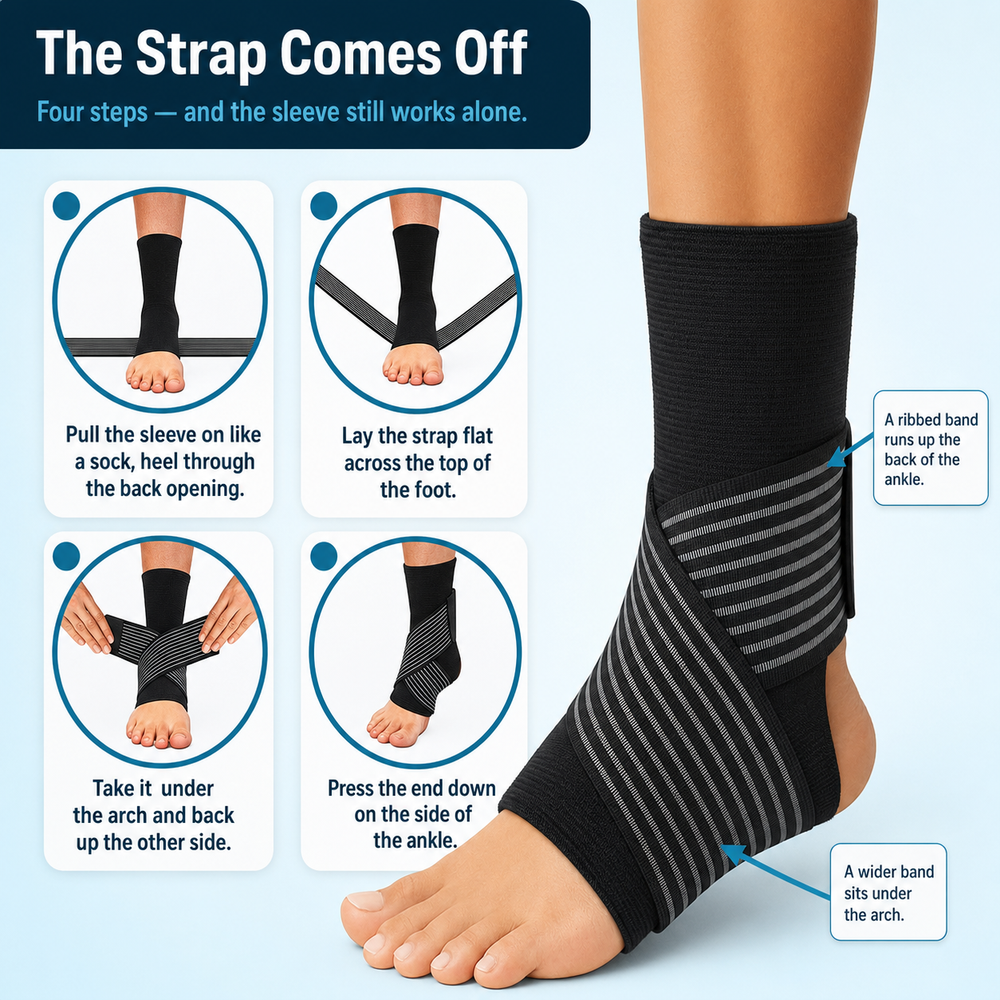
The Strap Comes Off
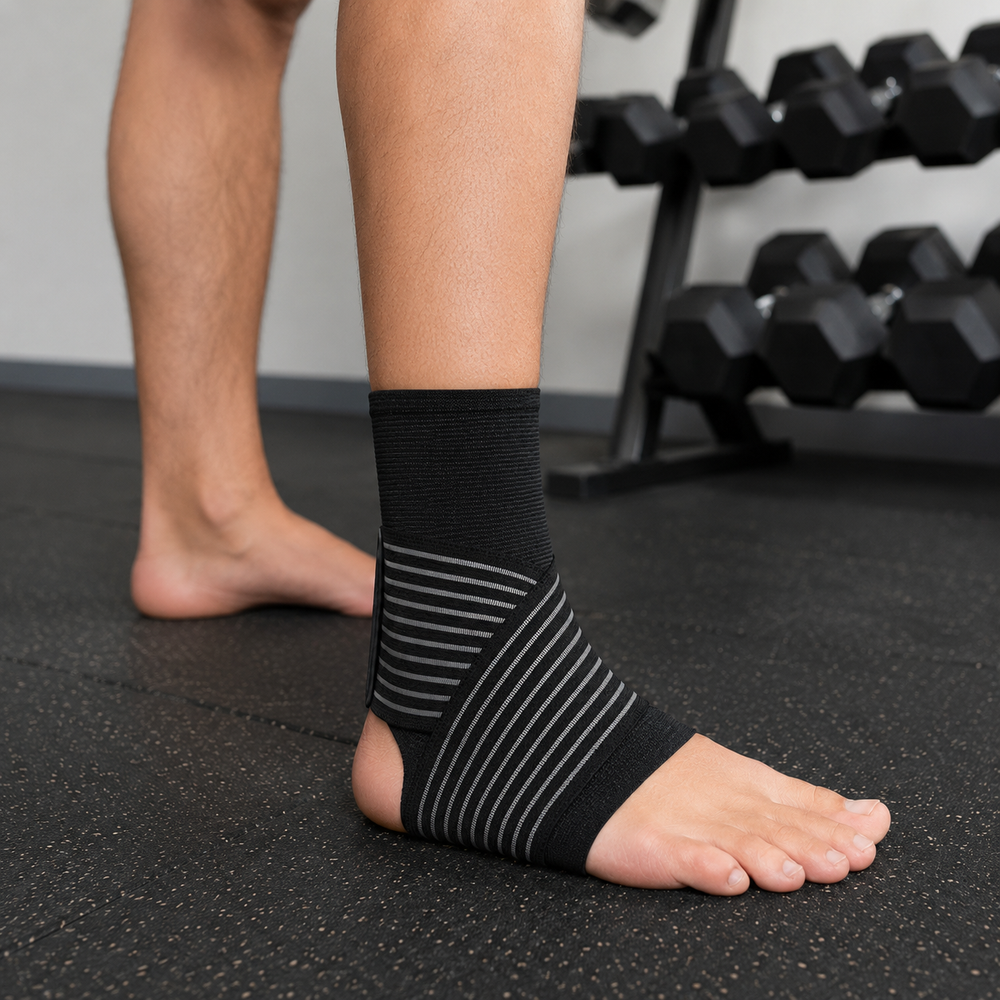
Four steps put it on: sleeve like a sock, strap across the top of the foot, under the arch, press it down at the side. Four seconds take it off again. With the strap you get a firmer hold because the band does not stretch; without it you get a thin sleeve you can forget about.
- The Strap Comes Off
- Four steps put it on: sleeve like a sock, strap across the top of the foot, under the arch, press it down at the side. Four seconds take it off again. With the strap you get a firmer hold because the band does not stretch; without it you get a thin sleeve you can forget about.
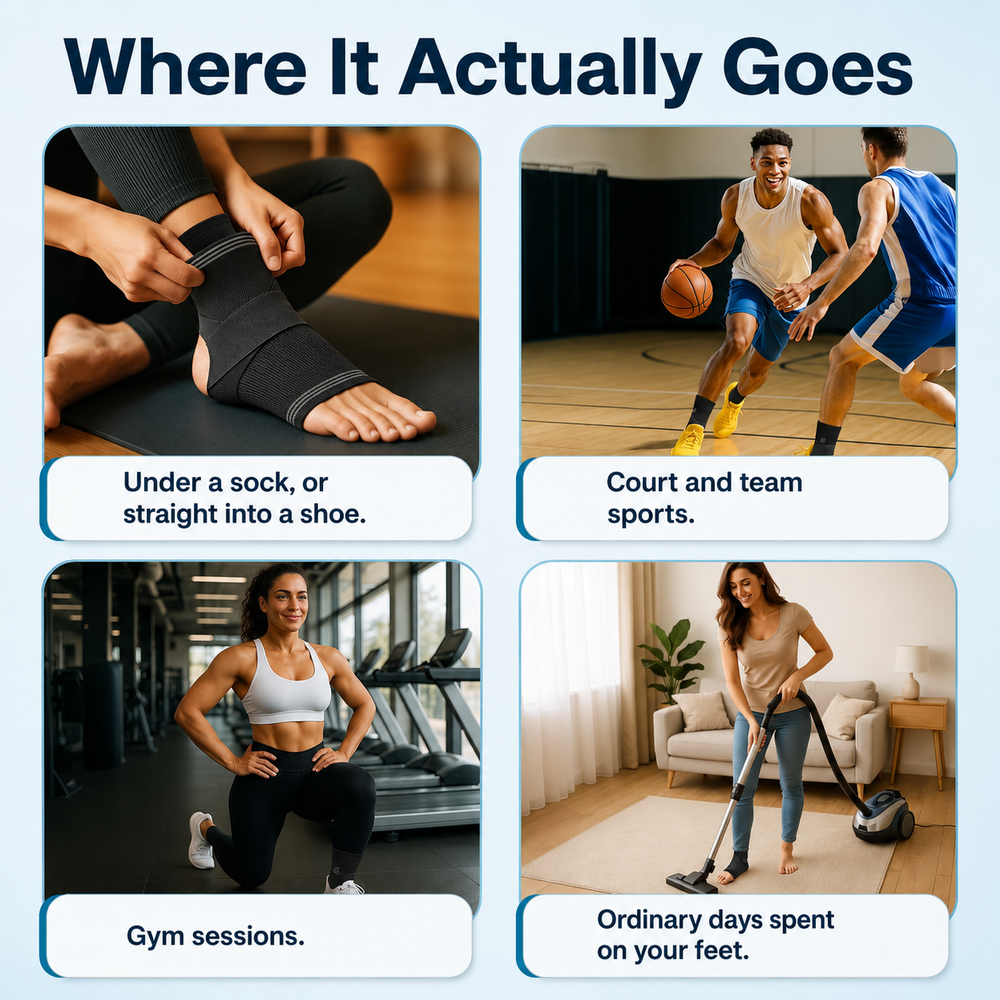
Where It Actually Goes
Under a sock, straight into a shoe, on court, in the gym, or simply on the days you are on your feet for eight hours. The sleeve is thin enough that none of those need a different brace.
- Where It Actually Goes
- Under a sock, straight into a shoe, on court, in the gym, or simply on the days you are on your feet for eight hours. The sleeve is thin enough that none of those need a different brace.
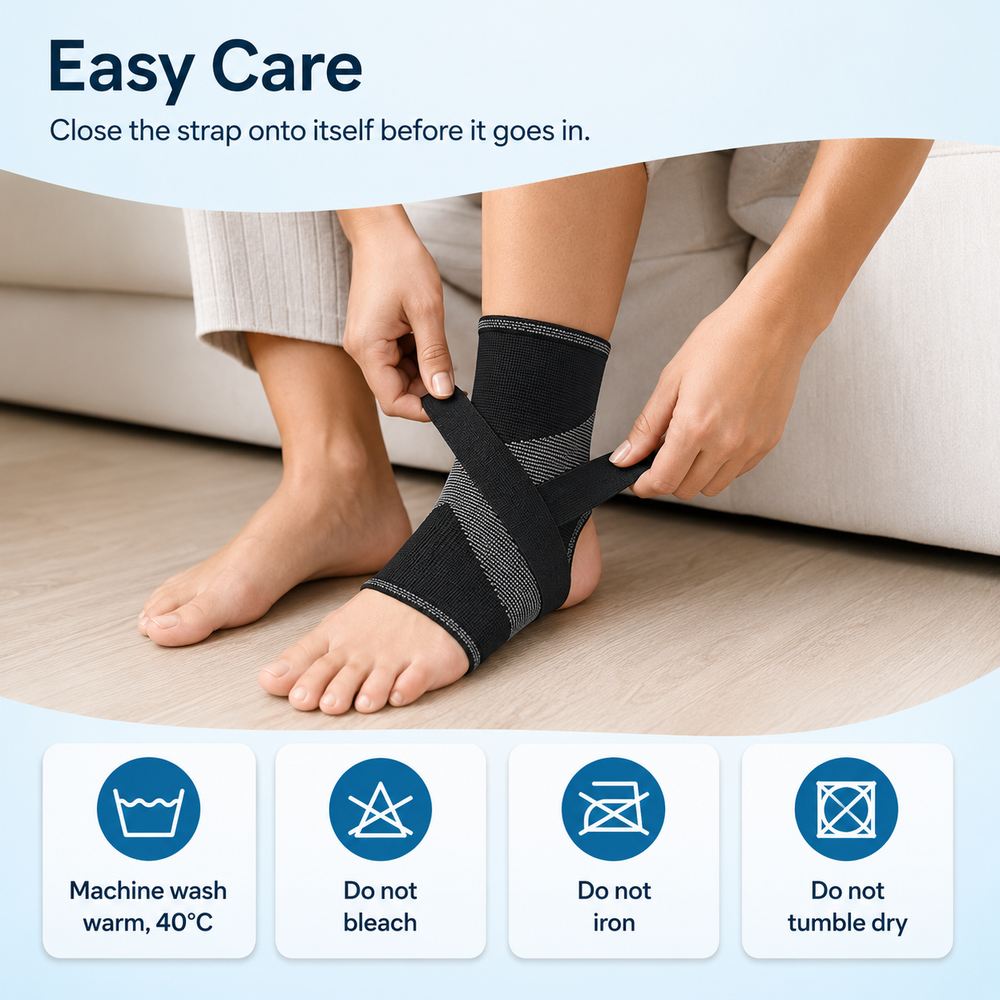
Easy Care
It goes in the machine at 40°C, which most knit braces quietly avoid mentioning. Close the strap onto itself first so the hook-and-loop does not grab the knit, then no bleach, no iron and no tumble dryer.
- Easy Care
- It goes in the machine at 40°C, which most knit braces quietly avoid mentioning. Close the strap onto itself first so the hook-and-loop does not grab the knit, then no bleach, no iron and no tumble dryer.
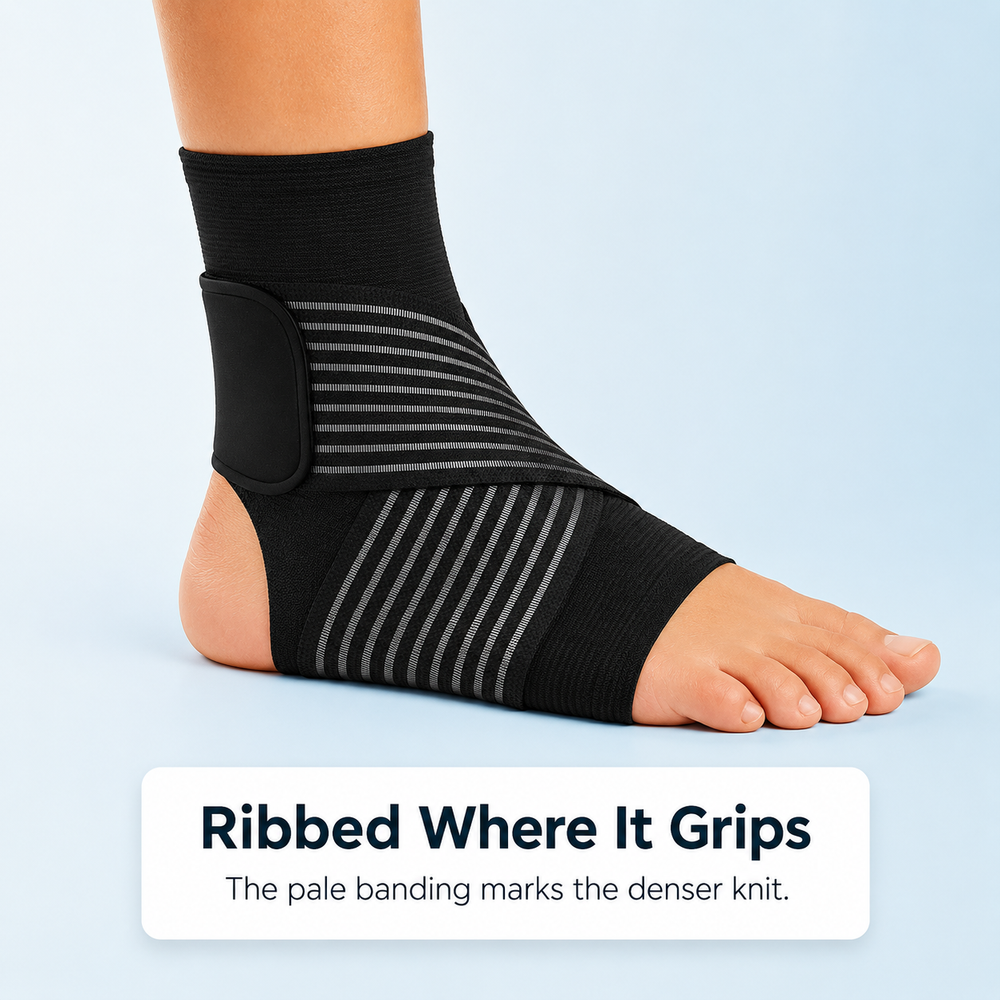
Ribbed Where It Grips
The pale banding is not decoration — it marks where the knit is denser. Those bands sit through the arch and around the ankle bone, so the ankle brace grips in two specific places and stays light everywhere else.
- Ribbed Where It Grips
- The pale banding is not decoration — it marks where the knit is denser. Those bands sit through the arch and around the ankle bone, so the ankle brace grips in two specific places and stays light everywhere else.
One brace. Two settings.
The Strap Comes Off
Four steps put it on: sleeve like a sock, strap across the top of the foot, under the arch, press it down at the side.
Where It Actually Goes
Under a sock, straight into a shoe, on court, in the gym, or simply on the days you are on your feet for eight hours.
Easy Care
It goes in the machine at 40°C, which most knit braces quietly avoid mentioning.
Ribbed Where It Grips
The pale banding is not decoration — it marks where the knit is denser.
How we compare.
Two settings from one ankle brace, which is the point of a strap you can take off.
Frequently asked
questions.
The questions people actually ask before buying one.
Around the arch, which is the middle of the foot, and not off your shoe size. S covers 9" to 10", M covers 10" to 12" and L covers 12" to 13". If you land exactly on 10" or 12", take the larger size — that is the maker’s own instruction and it is the right one.
Yes, and that is how most people wear it day to day. The sleeve is the light setting; the strap is there for the times you want the ankle brace to hold more firmly. Both come in the box.
The sleeve on its own, comfortably. With the strap on it gains a little bulk across the top of the foot, so a roomy trainer is fine and a narrow dress shoe is not.
One sleeve and one strap. It fits either foot, so if you want one on each side, order two.
Yes, warm at 40°C. Close the strap onto itself first so it does not catch the knit. No bleach, no iron, and let it air dry rather than tumbling it.
The sleeve alone is a light, even compression — noticeable but easy to wear all day. Add the strap and it steps up, because the strap is a flat non-stretch band rather than knit, so it holds the tension you set instead of giving it back.