

Built for being landed on.
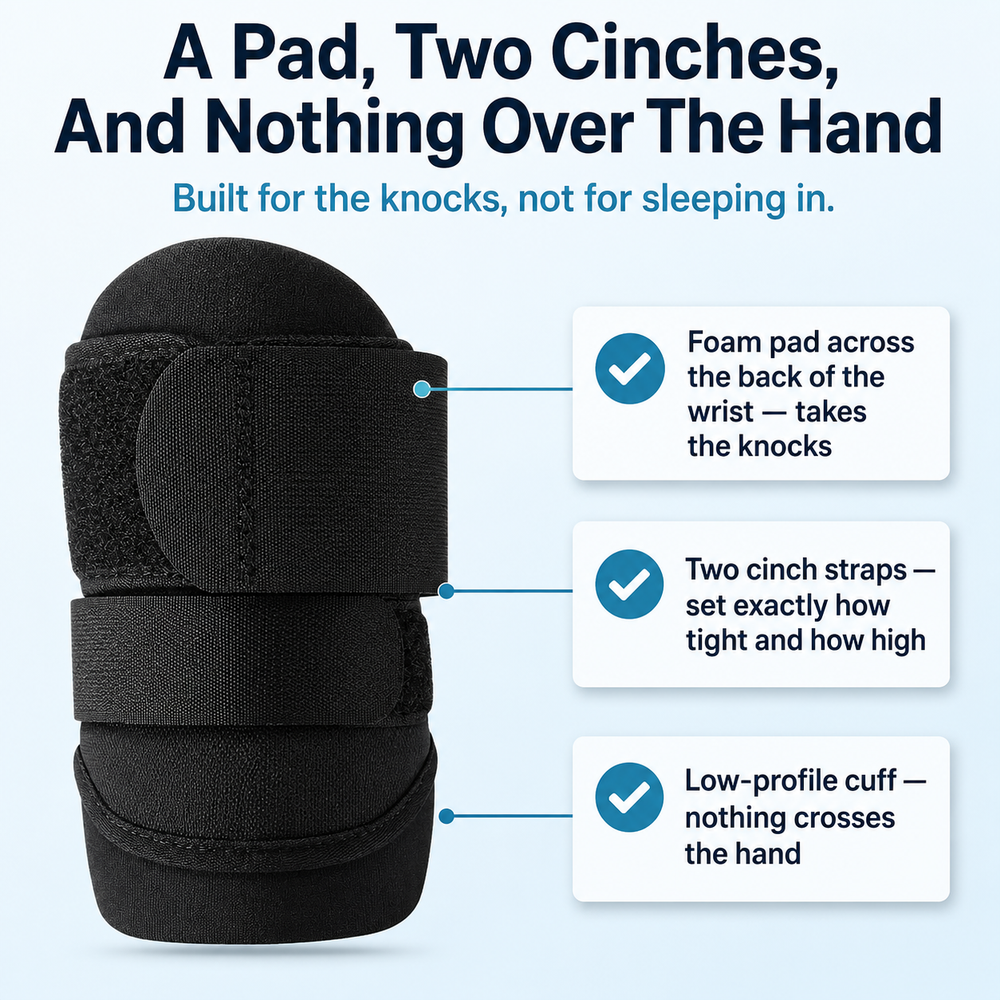
A Pad, Two Cinches, And Nothing Over The Hand
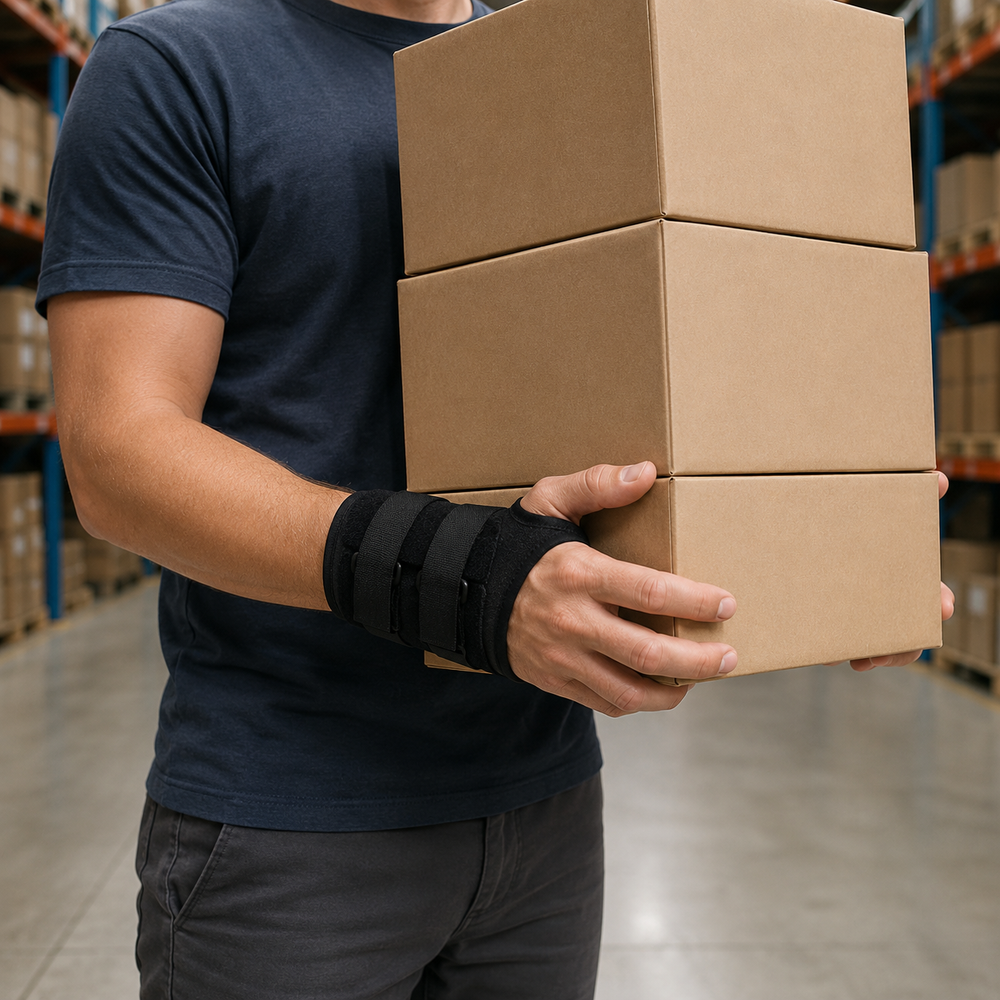
A shaped foam pad sits across the back of the wrist and takes the hits. Two elastic straps cinch over the top of it, so you set both how tight it is and how high up the forearm it sits. The hand itself is left completely alone — catching, gripping and pushing all still work.
- A Pad, Two Cinches, And Nothing Over The Hand
- A shaped foam pad sits across the back of the wrist and takes the hits. Two elastic straps cinch over the top of it, so you set both how tight it is and how high up the forearm it sits. The hand itself is left completely alone — catching, gripping and pushing all still work.
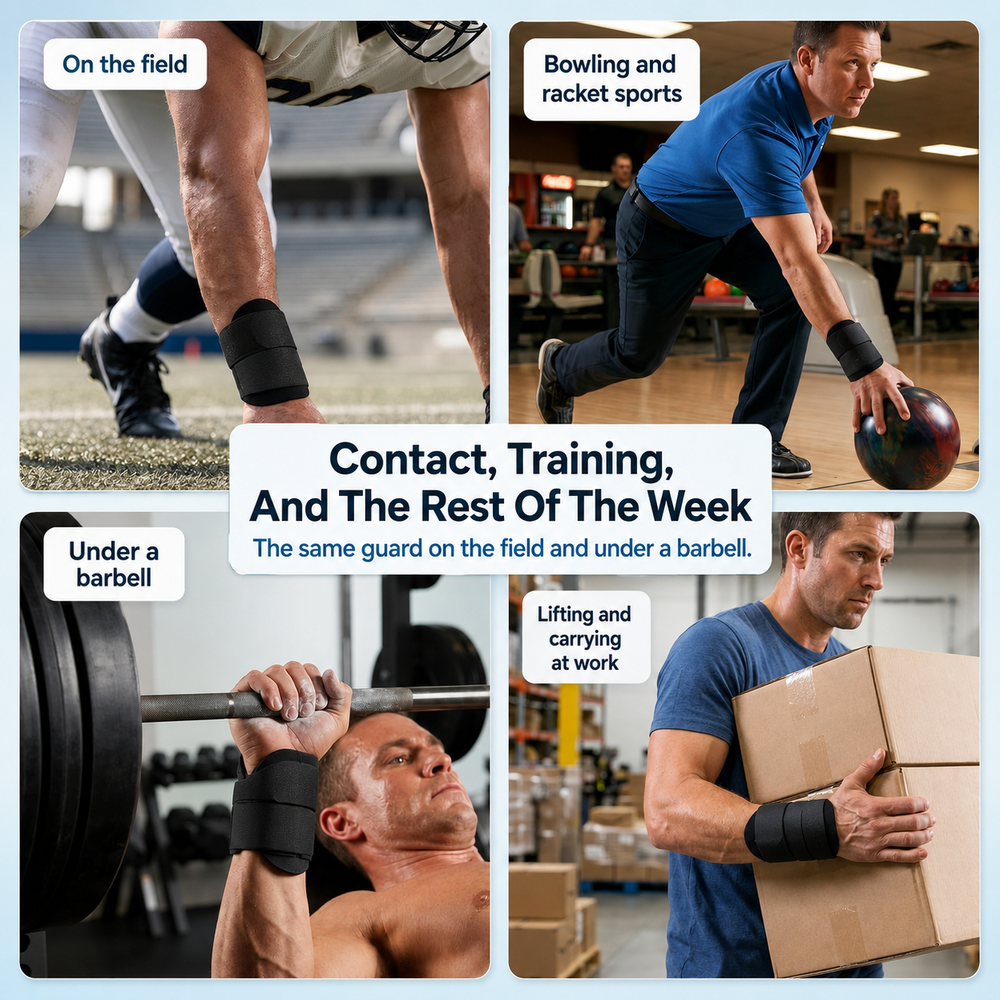
Contact, Training, And The Rest Of The Week
It was built for collision sports, which is why the shell is heavier than a desk brace and why the pad is there at all. That same build is what makes it the one you reach for under a barbell or on a day of carrying — it can take being landed on.
- Contact, Training, And The Rest Of The Week
- It was built for collision sports, which is why the shell is heavier than a desk brace and why the pad is there at all. That same build is what makes it the one you reach for under a barbell or on a day of carrying — it can take being landed on.
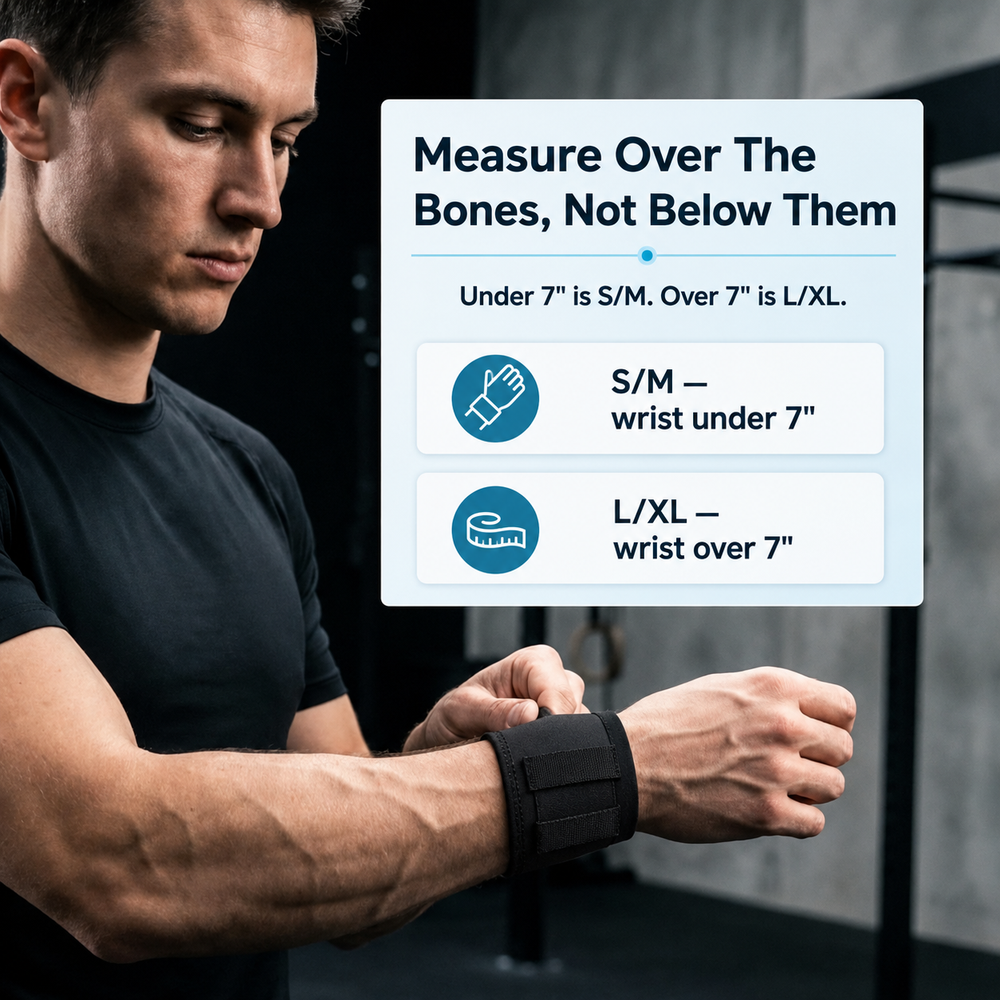
Measure Over The Bones, Not Below Them
This is the one people get wrong. Keep the wrist straight and run the tape directly over the joint, including the bones that stick out — not in the dip below them. Under 7" is S/M, over 7" is L/XL.
- Measure Over The Bones, Not Below Them
- This is the one people get wrong. Keep the wrist straight and run the tape directly over the joint, including the bones that stick out — not in the dip below them. Under 7" is S/M, over 7" is L/XL.
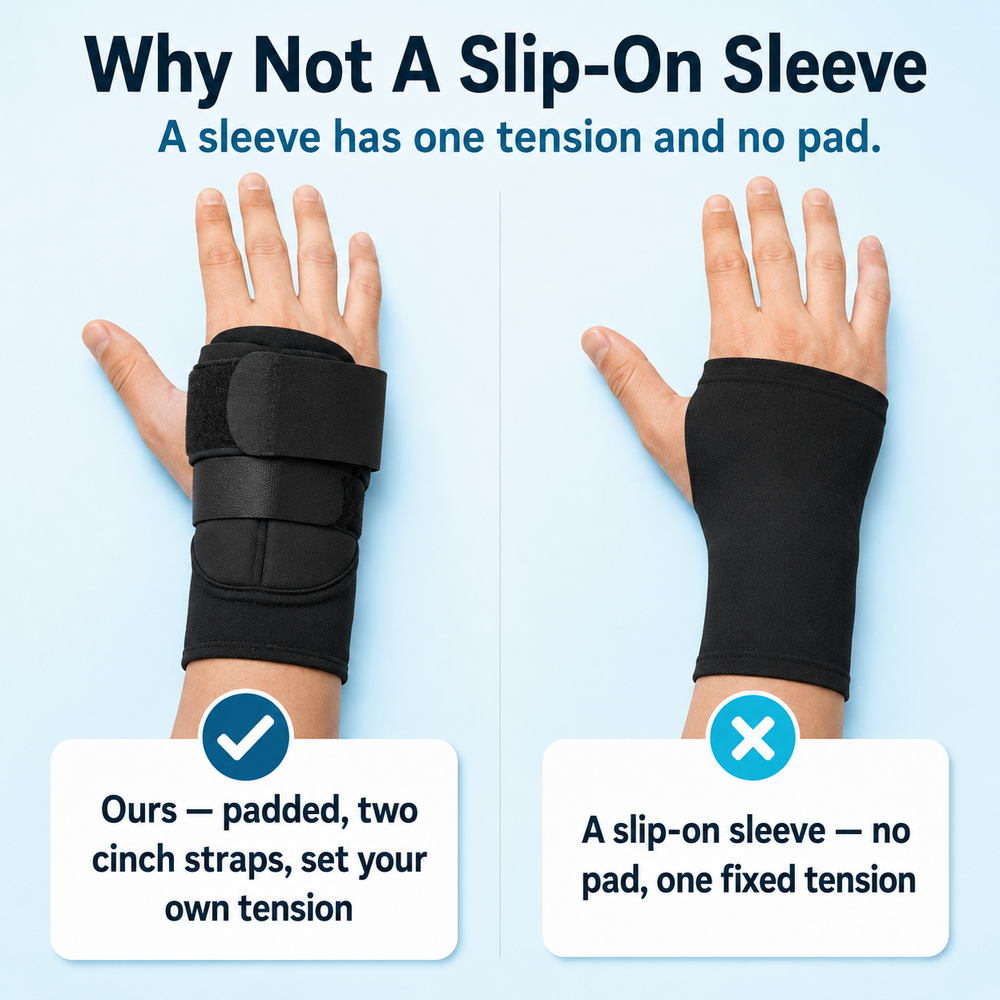
Why Not A Slip-On Sleeve
A slip-on sleeve gives you warmth and a fixed squeeze. This gives you a pad over the back of the wrist and two straps you set yourself, which is what you want when something is about to land on it. It is bulkier, and that is the trade.
- Why Not A Slip-On Sleeve
- A slip-on sleeve gives you warmth and a fixed squeeze. This gives you a pad over the back of the wrist and two straps you set yourself, which is what you want when something is about to land on it. It is bulkier, and that is the trade.
Heavier on purpose. Here is why.
A Pad, Two Cinches, And Nothing Over The Hand
A shaped foam pad sits across the back of the wrist and takes the hits.
Contact, Training, And The Rest Of The Week
It was built for collision sports, which is why the shell is heavier than a desk brace and why the pad is there at all.
Measure Over The Bones, Not Below Them
This is the one people get wrong.
Why Not A Slip-On Sleeve
A slip-on sleeve gives you warmth and a fixed squeeze.
How we compare.
A guard and a splint are not the same tool. This is the guard.
Frequently asked
questions.
The questions people actually ask before buying one.
No. There is one design and two sizes, so all you choose is S/M or L/XL.
Keep the wrist straight and run the tape directly over the joint, including the bones that stick out — not in the dip below them. Under 7" is S/M, over 7" is L/XL. Measuring below the bones is how people end up a size small.
Yes, and plenty of people buy it for exactly that. The pad and the two cinch straps hold the wrist firm under a bar. It is bulkier than a lifting wrap, which is the trade for the protection.
Under a loose work glove, usually. Under a fitted sports glove, no — the pad across the back of the wrist adds real height. It is designed to sit above the glove.
Warmer than a mesh brace. Neoprene holds heat, which is welcome outdoors in November and less welcome in a hot gym.
No. It limits how far the wrist goes back and it stops it moving loosely, but you can still use the hand — that is the point of a guard rather than a splint.
Hand wash in cool water with mild detergent, squeeze the water out and air dry flat away from heat. Fasten both straps down first.
Free U.S. shipping and a 30-day return window, so you can measure, wear it for a few nights and send it back if the fit is wrong.